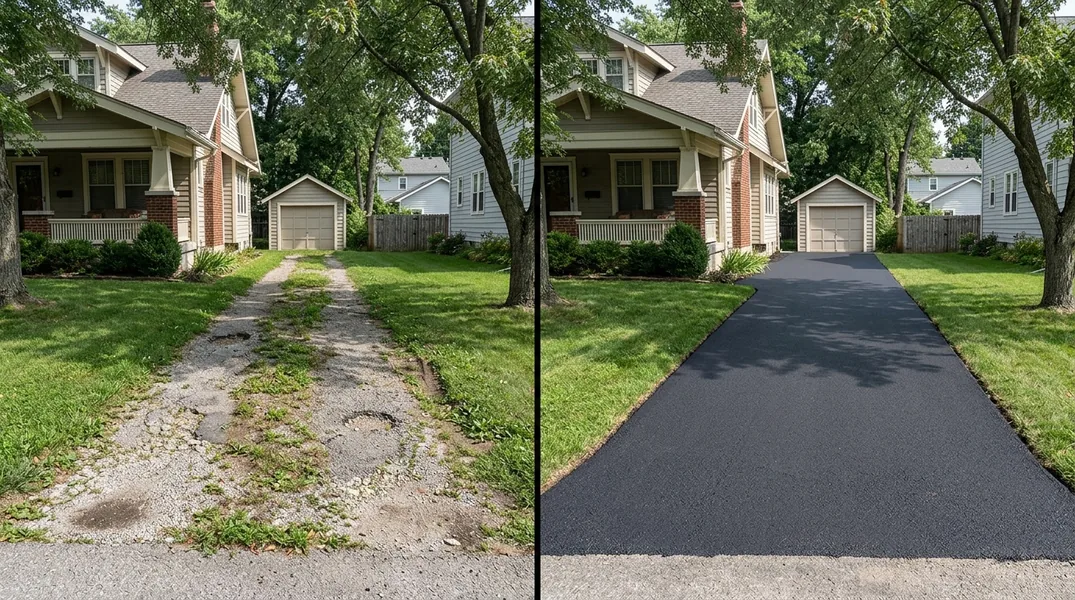
Understanding Louisville's Clay Soil Challenge
If you own a home in Louisville, you've likely noticed the distinctive reddish-brown clay that dominates the region's soil composition. This clay presents a unique challenge for driveways because it expands when wet and contracts when dry, creating constant movement beneath your pavement surface. Unlike sandy or well-draining soils found in other regions, Louisville's clay soil can shift by several inches throughout the year, particularly during spring thaw and heavy summer storms.
When clay soil moves, it pushes upward and sideways against whatever sits on top of it. This pressure is relentless and patient, working day after day to crack, heave, and destabilize your driveway. Homeowners who understand this geological reality make better decisions about whether to install asphalt or concrete. Both materials have strengths and weaknesses when dealing with expansive clay, and choosing the right one can save you thousands in repairs over the next decade.
Asphalt vs. Concrete Driveway: Performance in Clay Soil
When comparing Asphalt Driveway Paving & Installation to concrete in clay-heavy areas, the differences become clear quickly. Asphalt is flexible. It bends and moves with the soil beneath it rather than fighting against the expansion and contraction. This flexibility is actually an advantage in Louisville's climate. As clay swells and shrinks, asphalt can accommodate small movements without cracking. The material itself is more forgiving, which means minor settling won't immediately translate into structural failure.
Concrete, by contrast, is rigid. It doesn't bend. When clay soil expands beneath a concrete driveway, the concrete cracks because it cannot flex with the movement. These cracks start small but widen over time as the freeze-thaw cycle in Louisville winters works them deeper. Once concrete cracks, water seeps in, freezes, and expands, making the damage worse with each season. While concrete may appear more durable initially, it actually struggles more with clay soil dynamics than asphalt does.
That said, concrete does have one advantage: it doesn't require the regular maintenance that asphalt demands. However, when concrete fails in clay soil, the repair costs are often higher and the fixes are less elegant than what Asphalt Resurfacing & Overlay can provide.
Asphalt Driveway Lifespan in Louisville's Climate
The asphalt driveway lifespan in Louisville typically ranges from 15 to 20 years with proper maintenance. This might sound shorter than concrete's theoretical lifespan, but the reality is more nuanced. A well-maintained asphalt driveway in clay soil often outlasts a concrete driveway that has cracked and failed. The key is regular maintenance and timely repairs. Seal coating every two to three years, prompt Pothole Repair & Asphalt Patching, and addressing minor cracks before they become major problems can extend your blacktop driveway well beyond 20 years.
Concrete driveways in Louisville's clay soil often show significant cracking by year 8 to 12, even with minimal use. Once concrete fails, you're facing either expensive concrete replacement or the option to overlay with asphalt. Many homeowners find that starting with asphalt in the first place makes financial sense. The material's flexibility handles clay soil movement gracefully, and maintenance costs stay predictable and manageable throughout the driveway's life.
Can You Put Asphalt Over Concrete Driveway?
Yes, you absolutely can install asphalt over an existing concrete driveway, and this is actually a popular solution in Louisville for homeowners who have failing concrete. Asphalt over concrete driveway installation involves placing a layer of hot asphalt directly atop the concrete base. This approach works well because the concrete provides a stable foundation, while the asphalt layer on top offers the flexibility needed to handle clay soil movement. The asphalt layer also hides the concrete cracks beneath, giving you a smooth, attractive driving surface immediately.
The process is more cost-effective than removing the concrete entirely and starting fresh with asphalt. However, there are considerations. The concrete base must be reasonably stable and not severely heaved or cracked. If the concrete has already shifted significantly due to clay expansion, simply covering it with asphalt may not solve the underlying problem. Louisville Asphalt Paving recommends a professional assessment before proceeding. Over time, if the concrete beneath continues to move, you might see cracks reappear in the asphalt layer above. That said, when concrete is only moderately damaged, overlaying with asphalt is an excellent middle-ground solution that extends your driveway's life at a reasonable cost.
Maintenance Requirements: Asphalt vs. Concrete in Clay Soil
Asphalt requires more hands-on maintenance than concrete, but this maintenance is affordable and straightforward. Seal coating protects the asphalt from UV damage and water penetration, both critical in Louisville's humid climate. Regular seal coating every two to three years costs far less than replacing a cracked concrete driveway. Filling small cracks promptly prevents water from seeping into the base layer, which would accelerate deterioration. These maintenance tasks keep your blacktop driveway looking fresh and functional for years.
Concrete, while lower maintenance in the early years, becomes expensive to maintain once cracks appear. Concrete crack repair is temporary; the cracks often return because the underlying clay soil continues to move. Concrete sealers help but don't solve the root problem of soil movement. In clay soil areas, you're essentially managing decline with concrete rather than preventing it with asphalt. For homeowners who prefer a truly low-maintenance option, neither material is perfect in clay soil, but asphalt's maintenance costs remain far more predictable and manageable over a 15 to 20 year period.
Asphalt Driveway Paving & Installation Cost in Louisville: What to Budget
The pricing for Asphalt Driveway Paving & Installation in Louisville typically ranges from $3 to $7 per square foot, depending on the scope of work, site preparation, and current material costs. A standard 2-car driveway (roughly 500 square feet) might cost between $1,500 and $3,500 for installation. This is generally less expensive than concrete installation, which often runs $8 to $12 per square foot in the Louisville area. The cost difference becomes even more significant when you factor in long-term maintenance and repair expenses.
When budgeting for an asphalt driveway, remember that the initial installation cost is just the beginning. Seal coating (every 2-3 years) costs roughly $0.15 to $0.30 per square foot, and occasional crack filling or patching might run $100 to $300 per application. Over 20 years, these maintenance costs add up, but they're still typically less than dealing with concrete replacement or extensive concrete repair. For a detailed estimate tailored to your specific Louisville property and soil conditions, contact Louisville Asphalt Paving at (502) 754-0671 or request a free estimate online. Our team can assess your driveway needs and provide transparent pricing based on your exact situation.
Making Your Decision: Which Material Wins in Louisville?
For most homeowners in Louisville dealing with clay soil, asphalt emerges as the more practical choice. Its flexibility handles soil movement better, its maintenance is straightforward and affordable, and its asphalt driveway lifespan is respectable when properly cared for. Concrete might appeal to those who want to install it once and forget about it, but in clay soil, that dream rarely materializes. You'll likely be managing cracks and repairs within a decade. If you already have concrete and it's failing, overlaying with asphalt is a smart solution that gives you the benefits of both materials.
The best choice ultimately depends on your priorities, budget, and willingness to perform basic maintenance. If you value flexibility, manageable costs, and predictable performance in Louisville's challenging soil conditions, asphalt is your answer. Ready to move forward? Contact Louisville Asphalt Paving today at (502) 754-0671 or request a free estimate to discuss your driveway project. Our experienced team has installed countless driveways throughout Louisville and understands exactly how to handle the region's unique soil conditions. Let us help you choose the right material and install a driveway built to last.
Looking for a professional asphalt paving contractor in Louisville? Louisville Asphalt Paving responds fast for all your asphalt paving needs.
Get a Free Quote