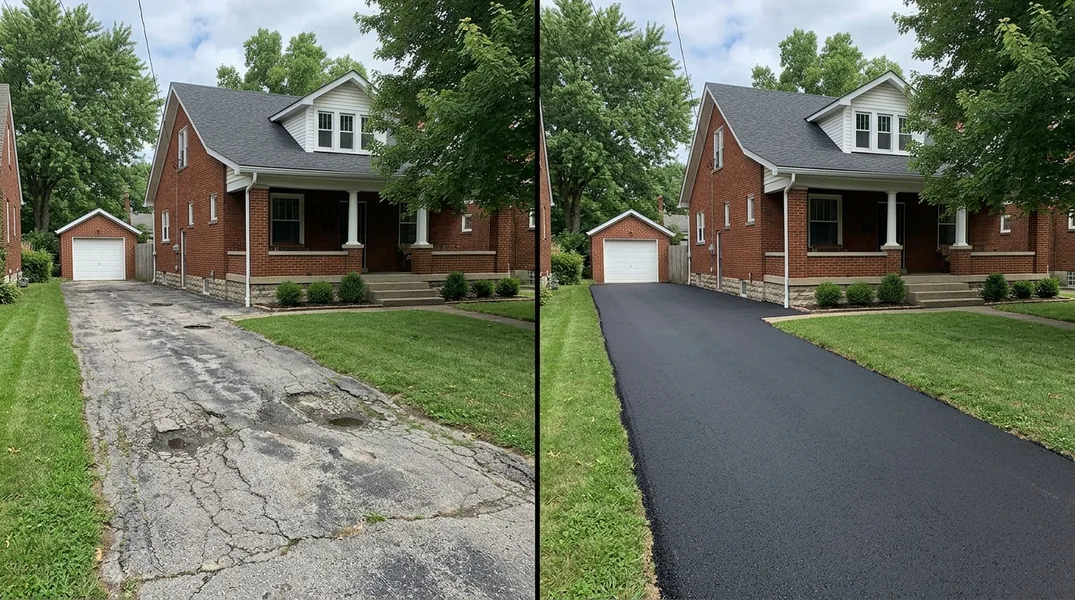
The Hidden Enemy Beneath Your Driveway
When homeowners in Louisville call about driveway problems, they often blame the asphalt itself. They assume poor installation or cheap materials caused the cracks, potholes, or uneven sections. But the real culprit lies six inches below the surface. The clay-heavy soil that dominates Louisville and surrounding areas is the primary reason driveways fail prematurely, regardless of asphalt quality.
Kentucky's Bluegrass region sits on expansive clay soils that expand when wet and contract when dry. This constant movement creates stress on whatever sits on top of it. Unlike sandy or well-draining soils that remain relatively stable, clay acts like a living foundation that shifts with the seasons. Winter freeze-thaw cycles make this problem exponentially worse. Water seeps into the soil, freezes, expands, and pushes upward with tremendous force. This phenomenon, called frost heave, can lift an entire section of your driveway several inches. When spring arrives and the soil thaws, it settles unevenly, leaving your once-smooth surface cracked, buckling, and broken.
Understanding Frost Heave and Why It Destroys Louisville Driveways
Frost heave isn't a manufacturing defect or an installation mistake. It's a natural geological process that affects every Louisville homeowner equally. When temperatures drop below freezing, water trapped in the clay soil expands by approximately 9 percent. This expansion pushes upward with enough force to lift concrete and asphalt surfaces. The damage becomes visible as heaving, buckling, and cracking. When the ground thaws, the soil settles back down, but rarely at a uniform rate. Some areas settle faster than others, creating the uneven, wavy surface that makes your driveway look like it's melting.
What makes frost heave driveway repair so frustrating is that it happens regardless of asphalt thickness or quality. A premium-grade asphalt installation will fail just as quickly as a budget option if the soil beneath isn't properly prepared and managed. This is why simply patching the surface or applying a new layer doesn't solve the underlying problem. You're essentially putting a new coat of paint on a house with a crumbling foundation. The asphalt will fail again within one to three years if the soil movement continues unchecked.
Why Standard Asphalt Driveway Paving & Installation Isn't Enough in Clay-Heavy Regions
Many homeowners and even some contractors treat driveway installation as a simple process: prepare the base, lay asphalt, and you're done. In regions with stable soil, this approach works fine. But in Louisville, where clay dominates, this shortcut leads to premature failure. Proper Asphalt Driveway Paving & Installation in clay areas requires additional steps that many contractors skip to save time and money.
The foundation matters far more than the asphalt itself. A proper installation includes adequate base preparation, improved drainage, and sometimes soil stabilization. This means removing the existing material, evaluating the soil composition, and adding a compacted stone base layer thick enough to distribute weight and manage moisture. Some situations require a French drain system or other drainage solutions to prevent water from accumulating beneath the surface. These extra steps add cost upfront but prevent the catastrophic failures that cost thousands to repair later. When you invest in proper installation with soil conditions in mind, your driveway will last 15 to 20 years. When you skip these steps, you'll be calling for Driveway Repair within five years.
Repair or Replace: Making the Right Choice for Your Damaged Driveway
When your driveway shows signs of damage, the question becomes whether to repair or replace. The answer depends on the extent of damage, the age of the surface, and what's causing the failure. If your driveway is relatively young and shows isolated cracks or a few small potholes, Pothole Repair & Asphalt Patching might be a temporary solution. However, if you're seeing widespread cracking, multiple heaved sections, or if the damage returned shortly after your last repair, you need to address the soil problem, not just patch the asphalt.
The decision to repair or replace asphalt driveway surfaces should factor in the root cause. If frost heave or clay soil movement is the culprit, patching is merely delaying the inevitable. A proper replacement addresses the foundation issues that caused the failure in the first place. This might involve excavation, soil stabilization, improved drainage, and a new asphalt layer designed to handle the specific soil conditions. Yes, this costs more than a simple patch job, but it actually solves the problem instead of creating a cycle of repeated repairs.
What Louisville Homeowners Should Know About Soil Preparation and Drainage
The most overlooked aspect of driveway longevity is what happens beneath the surface. Proper soil preparation and drainage systems are the difference between a driveway that lasts 20 years and one that fails in five. In Louisville, where heavy clay soils trap moisture, drainage becomes critical. Water that sits beneath your driveway will freeze in winter, expand, and destroy the asphalt above. Water that drains away prevents this cycle entirely.
When Louisville Asphalt Paving evaluates a driveway project, we assess the existing drainage situation and the soil composition. If water pools or drains poorly, we recommend installing a perimeter drain or improving the grade to direct water away from the driveway. We also evaluate whether the base layer is adequate and whether soil stabilization products might improve performance. These considerations might seem technical, but they directly impact whether your investment lasts a decade or requires replacement in five years. The good news is that modern asphalt contractors understand these issues and can design solutions specifically for clay-heavy regions.
Taking Action: When to Call a Professional Near You
If you're seeing cracks, potholes, or uneven sections in your Louisville driveway, don't wait for the damage to worsen. Early intervention, when the damage is still limited to surface cracks, offers more options and costs less than waiting until the entire surface fails. A professional evaluation can determine whether your situation calls for Pothole Repair & Asphalt Patching, Asphalt Resurfacing & Overlay, or a complete replacement with proper soil preparation.
Louisville Asphalt Paving serves Louisville and surrounding areas with expert driveway solutions designed for local soil conditions. We understand how clay soils behave through the seasons and design installations that account for frost heave, drainage issues, and the unique challenges of Kentucky's climate. If you're ready to address your driveway problems with a solution that actually works, contact us today for a free estimate. Call (502) 754-0671 to discuss your situation with a professional who understands why Louisville's soil matters more than the asphalt itself.
Looking for a professional asphalt paving contractor in Louisville? Louisville Asphalt Paving responds fast for all your asphalt paving needs.
Get a Free Quote